Instant lotteries, commonly known as scratch-cards, remain one of the simplest and most accessible gambling products in the UK and across Europe. Their structure is straightforward, yet the mathematics behind them relies on clear probability models, predetermined prize pools and regulatory safeguards. Understanding how these games work helps players evaluate risks, financial implications and the realistic likelihood of winning in 2025.
How Modern Scratch-Cards Work in Practice
Contemporary scratch-cards used in retail locations and digital environments follow a fixed prize-distribution model. Each game has a predefined number of winning and non-winning tickets before it reaches the market. This model guarantees that the overall return-to-player percentage (RTP) remains constant across a large volume of sold cards, making the outcome independent of when the ticket is purchased.
In the UK, the National Lottery and licensed private operators use centralised systems that assign results during production, not at the time of purchase. For printed cards, the outcome is physically embedded underneath the covering layer. For digital versions, the combination is generated based on an audited database of predetermined results, ensuring that fairness does not rely on real-time randomisation.
Each scratch-card series undergoes regulatory auditing prior to release. This includes verification of total prize pools, distribution of high-tier rewards, and confirmation that advertised odds correspond to mathematical reality. These audit procedures form part of gambling regulations enforced by the UK Gambling Commission, which requires transparent public reporting of expected returns.
Ticket Types and Variations Available in 2025
Simplified games remain the most common format, offering one-step matching mechanics such as revealing three identical symbols or uncovering a single winning number. These cards usually have modest top prizes and are priced at the lower end of the market, typically between £1 and £3. Their appeal lies in rapid outcomes, which require minimal participation time.
Advanced cards offer extended playfields with multiple panes, bonus sections and multipliers. These products tend to have higher price points ranging from £5 to £10 and may include medium-tier prize structures that distribute rewards more evenly. The format aims to increase engagement while maintaining a predetermined outcome model.
Digital scratch-cards available through licensed online operators replicate these structures. They rely on graphical overlays rather than physical coating, but the winning combinations are still drawn from predetermined databases. Regulatory requirements ensure that digital products adhere to the same probability standards as their printed counterparts.
Should Players Consider Scratch-Cards a Worthwhile Option?
The simplicity of scratch-cards often gives the impression that winning is more achievable than in traditional lotteries. However, statistical models indicate that most funds spent on these products are not returned to players. Typical RTP rates for UK-regulated scratch-cards vary between 50% and 74%, which is significantly lower than many casino games, including table games and regulated slots.
The perceived value of scratch-cards mainly depends on player expectations. They offer minimal strategy, immediate results and short sessions, but they do not provide consistent returns. For individuals who treat them as occasional entertainment with small stakes, the product may be acceptable. For players seeking high-value potential, scratch-cards remain one of the lowest-return forms of regulated gambling.
Responsible gambling frameworks introduced in 2024–2025 encourage players to view scratch-cards as low-probability entertainment rather than a practical method of improving their financial situation. The UK Gambling Commission and charity organisations recommend spending only disposable funds and avoiding repeated purchases after losses.
Financial Risks and Behavioural Considerations
Scratch-cards create a psychological effect based on immediate feedback. The short time between purchase and outcome encourages repeated attempts, particularly when small wins are involved. These smaller rewards form part of the predetermined design, allowing players to feel regular but low-value returns that do not offset overall losses.
Higher-priced cards often appear more attractive due to larger advertised jackpots. However, these products also carry increased volatility. The majority of prize pools are allocated to smaller wins, while high-tier rewards represent a tiny fraction of all available tickets. This distribution model means that the cost-to-return ratio does not improve with more expensive cards.
Budgeting recommendations from major responsible gambling organisations suggest setting strict spending limits, tracking expenses and avoiding chain purchases. These guidelines are intended to prevent habitual play triggered by the rapid nature of the product.
What Are the Real Odds of Winning in 2025?
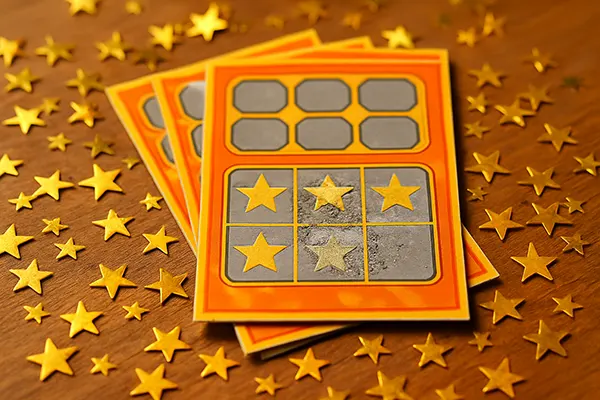
Every scratch-card series publishes its odds on the back of the ticket or within the game’s digital description. Typical odds of winning any prize range from 1 in 3.5 to 1 in 5. However, most of these wins correspond to low-value returns that do not exceed the ticket price. This means that “winning” does not necessarily translate into profit.
High-tier prizes such as £100,000 or £1,000,000 are extremely rare. Probability data released by the National Lottery indicates that top prizes usually occur once per several million tickets. Because prize pools are predetermined, once the high-tier reward is claimed, the remaining cards cannot produce another identical outcome. This is why players sometimes find games “withdrawn” before all tickets are sold.
Digital scratch-cards follow identical statistical models, and their odds are publicly available via operator disclosures. Independent audits ensure that digital distribution does not alter prize frequency, and published return rates remain consistent across physical and online versions.
Understanding RTP and Expected Loss
RTP, or return-to-player percentage, shows how much money is theoretically returned to players across millions of tickets. For scratch-cards, this figure is significantly lower than many other regulated gambling products. This means that, over time, players are mathematically expected to lose a substantial portion of their total stakes.
Expected loss calculations are straightforward. A £3 scratch-card with an RTP of 62% returns an average of £1.86 per ticket over the full print run. Individual results vary, but the long-term average ensures profitability for operators. This mathematical framework is transparent and publicly available for all regulated games.
Players seeking improved value often prefer games with higher RTP or clearer risk models. Scratch-cards deliver instant outcomes but do not offer favourable odds for long-term play. Understanding these figures helps individuals make informed decisions and manage expectations realistically.